
The Microgrid Power Systems training equipment (Edquip)
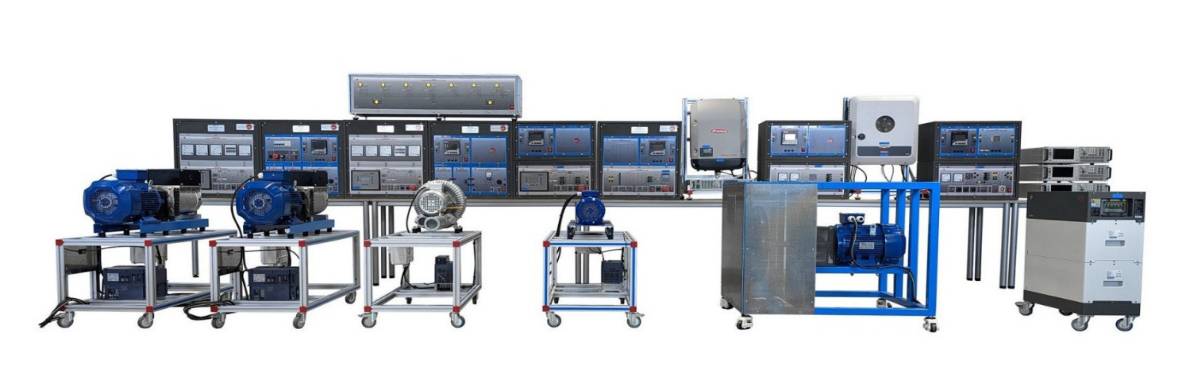
Order Code: 26279989.1
Category: General Lab Equipment V
The Microgrid Power Systems training equipment (Edquip)
SPECIFICATION
General Description
The Microgrid Power Systems training equipment, "AEL-MGP," has been designed by EDIBON for theoretical and practical education on microgrid power systems. In today’s global context, microgrids play a crucial role in the transformation of the energy system. These infrastructures enable the local integration of renewable energy sources, intelligent demand management, and energy storage, facilitating autonomy and continuity of supply even during failures or disconnections from the main grid. Additionally, they contribute significantly to reducing greenhouse gas emissions and democratizing energy access, especially in rural or isolated areas. Consequently, EDIBON has meticulously developed the "AEL-MGP" system to address this educational and technological need. It is a comprehensive, hands-on teaching tool that allows users to simulate, analyze, and understand the real operation of a hybrid microgrid.
Features
It has features and functions and can-do experiments on
PWP-CE. Conventional Energy Power Plant.
PWP-HE. Hydroelectric Power Plants.
PWP-WE. Wind Power Plants.
PWP-PE. Phototvoltaic Power Plants.
PWP-BE. Batteries Energy Storage Power Plant.
PWP-FE. Flywheel Storage Power Plant.
Practical possibilities required with the Conventional Energy Power Plant, "PWP-CE":
Configuration of key parameters in a conventional power plant for subsequent analysis and comparison: definition of ambient conditions at the turbine inlet (pressure/temperature), compressor parameters (pressure ratio, efficiency), boiler parameters (pressure drops, combustion efficiency), and turbine characteristics (t3max, efficiency, exhaust gas pressure).
Exergy analysis and performance evaluation of the conventional generation plant.
electrical efficiency comparison during start-up and operation of a conventional plant using different gas types (natural gas, kerosene, propane, butane, or hydrogen).
Coordinated black start operation with the activation of critical and non-critical loads simulated through electronic loads.
System stability study via scheduled load ramping configured from the scada system.
Real-Time primary voltage regulation: visualization of the voltage regulator’s dynamic adjustment in response to user-induced demand fluctuations under islanded operation mode.
Sequential adjustment of active power setpoint in grid-following mode with grid connection: analysis of the dynamic response of the machine’s regulation system.
Graphical visualization of the conventional plant’s emergency response following a sudden drop in renewable generation in an isolated microgrid.
Grid parameter monitoring and power flow analysis based on a user-defined demand curve.
Real-Time synchronization study: evaluation of breaker 52g closing conditions (voltage, frequency, phase sequence).
Synchronization operations between the conventional plant and the laboratory’s internal grid or an external grid.
Study of blackout scenarios and the restoration of power supply in a microgrid environment.
Practical possibilities recommended with the Wind Energy Power Plant, "PWP-WE":
Study of the wind energy generated by configuring the operating conditions (maximum wind turbine power, wind conditions: minimum and maximum values, and generation of the power vs. wind speed curve).
Real-Time validation of the theoretical power curve of the wind generator under dynamic wind conditions.
Analysis of the impact of active power production due to wind variations on the reactive power consumed by the machine.
Synchronization process and interaction of renewable resources with other plants in the microgrid while maintaining system stability in a microgrid environment.
Remote monitoring and energy management through the control of the wind power setpoint using the scada system.
Optimization of energy dispatch during nighttime periods: Coordination between wind generation, storage systems, and loads in microgrids with photovoltaic solar generation.
Coordinated dispatch strategies for gas plants, renewable energies, and hydropower in microgrids: real-time adjustment of setpoints based on user-generated renewable resource profiles (irradiance/wind) and load demand.
Real-Time synchronization study: Evaluation of breaker closure conditions for switches 52G and 52NET.
Practical possibilities recommended with the Photovoltaic Energy Power Plant, "PWP-PE":
Accurate simulation of photovoltaic (PV) generation through the configuration and integration of real irradiance profiles and definition of operating conditions (Voc, Imax, Pmax) of the PV panel.
Comparison between the power generated by the PV panel and the power delivered to the microgrid by the inverter.
Comprehensive analysis of the V-I curves of the photovoltaic system under different irradiance levels.
Optimization, coordination, and management of bidirectional power flow between photovoltaic generation, battery storage, and flywheel storage under conditions of high renewable resource and demand variability.
System failure due to lack of coordination between renewable plants and storage systems: Risk assessment of energy collapse during low-demand hours resulting from inefficient resource management.
Oversizing of solar capacity: Assessment of operational risks in frequency/voltage stability and energy-related risks such as curtailment or battery storage system overload.
Strategic management of nighttime coverage: Synchronization between hydroelectric plants and storage systems to minimize conventional generation integration and ensure energy continuity after sunset.
Energy optimization of the microgrid: Evaluation of fuel consumption and operational efficiency of the conventional plant under different photovoltaic integration scenarios.
Practical possibilities recommended with the Hydroelectric Energy Power Plant, "PWP-HE":
Study of the energy conversion principle in a hydroelectric power plant and its integration within microgrid environments.
Evaluation and configuration of the fundamental parameters of a hydroelectric plant: turbine type (Pelton, Francis, Kaplan), head height h, efficiency rates (hydraulic turbine, generator, mechanical), and reservoir capacity.
Analysis of the overall performance of a hydroelectric plant (turbined vs. pumped energy) in response to dynamic load profiles.
Optimal management of pumping and turbining operations based on user-defined variable demand scenarios.
Hydrological resource depletion scenario within the microgrid: operational transition supported by energy storage systems to ensure stability of fundamental grid parameters (v/f).
Evaluation and analysis of hydraulic design parameters and resulting generation profiles based on the selected turbine type (pelton, francis, or kaplan).
Interaction between the hydroelectric plant (pwp-he) and the wind power plant (pwp-we) under wind variability events.
Dynamic management of operation modes between grid-forming (v-f) and grid-following (p-q) following simulated maintenance operations or failures in the conventional power plant (pwp-ce).
Influence of flow rate by configuring hydro plant parameters and its impact on voltage/frequency stability in an islanded microgrid mode.
Practical possibilities recommended with the Battery Energy Storage Power Plant, "PWP-BE":
Manual management and adjustment of the power setpoint during battery charge and discharge periods in response to variability of renewable resources (wind and irradiance).
Response and operation of the battery energy storage system under overgeneration conditions and reverse power flow scenarios.
Dynamic management of battery storage to support frequency regulation, peak shaving, and critical backup in smart microgrids.
Impact of the storage plant during simulated unexpected disconnections or generation plant outages for subsequent analysis of system stability maintenance in the microgrid.
Interaction between the flywheel and battery storage systems for rapid frequency stabilization.
Protocol to maximize battery lifetime and efficiency by defining battery charge/discharge timing based on State of Charge (SOC %).
Real-time visualization of State of Charge (SOC) and graphical monitoring of power during battery charge/discharge periods.
Management and interaction of batteries with renewable generation in microgrids: Analysis of daytime surplus energy and nighttime demand operation.
Evaluation of backup capacity and autonomy in case of prolonged main grid failure.
Practical possibilities recommended with the Flywheel Storage Energy Power Plant, "PWP-FE":
Impact of the flywheel on frequency stabilization in hybrid microgrids: System response under overgeneration and energy deficit scenarios.
Impact of reverse power flow in microgrids with high penetration of distributed generation: diagnosis under conditions of generation surplus versus demand, storage plant management failures, or blackout situations.
Support for generator start-up and synchronization through the flywheel system.
Simulation of overload scenarios in islanded mode and microgrid collapse prevention via active braking of the flywheel.
microgrids: Response time, frequency stability, and comparative support capacity of inertial storage versus battery-based storage.
Impact of improper frequency setpoint adjustment on flywheel behavior leading to microgrid instability and potential blackout.
Flywheel response during transitions between grid-connected and islanded modes.
Practical Applications with the Complete System Comprising All Plants, Microgrid Power System, "AEL-MGP":
Evaluation and graphical visualization of frequency response to simulated disturbances (sudden demand spikes, abrupt load disconnections, or critical event simulations).
Simulation of real grid operator actions through programming variable load profiles and assessing flow control by adjusting the set points of power plants.
Graphing the generation contribution of each microgrid plant and its interaction with frequency variations and variable load demand.
Understanding the structure, operation, and architecture of a hybrid microgrid.
Real-time supervision, data acquisition, and analysis of electrical parameters at any point within the microgrid.
Design and operation of an islanded microgrid to meet the real demand profile of a community or isolated area, with control and monitoring via SCADA.
Implementation of protocols for safe shutdown procedures from the SCADA environment.
Simulation of maintenance operations on system plants, coordinated with other plants to maintain continuous and high-quality power supply.
Comprehensive analysis of the impact of renewable overgeneration on frequency stability: Study of blackout scenarios and power quality in microgrids.
Graphical real-time visualization of energy contribution in response to generation and demand fluctuations.
Enquiry Form
Related Product



Tesca specialize in doing turnkey projects that is fully operable when it is handed over to the project authority. Starting from inception to application training, Tesca provides the services as ONE source solution. Working side by side with government authorities and people across the World, we help countries to perform better. We support countries grow their economies, strengthen their education and health systems and improve financial management. We do this by providing consultancy & training in environment safety, education, health strengthening.
Category
Useful Links
Contact Us
International Sales:
 91-9829132777
91-9413330765
India Sales:
91-9588842361
2026 © All Rights Reserved.